How to Get Rid of Hiccups: Remedies That Actually Work
This post contains affiliate links. If you buy through our links, we may earn a small commission at no extra cost to you — and it helps keep Forged Family HQ running. We only recommend what we actually use or have researched thoroughly.
It always happens at the worst moment. Right in the middle of a quiet dinner. Or during the car ride home when everyone is finally calm. Or — my personal favorite — when the baby has just drifted off to sleep and your four-year-old gets a case of the hiccups so loud the dog wakes up.
Hiccups are one of those things every family deals with, but nobody really knows how to stop them. We’ve all heard the remedies. Hold your breath. Drink water upside down. Get scared. Eat a spoonful of sugar. But which ones actually work? And why do they work?
We went deep on this one — pulling together folk remedies from around the world, traditional medicine practices, and actual research — to figure out how to get rid of hiccups fast. Some of the answers surprised us. A few of the old wives’ tales turned out to be more right than anyone realized.
Here’s what we found…
What’s Actually Happening When You Hiccup
Before you can stop something, it helps to understand what’s causing it.
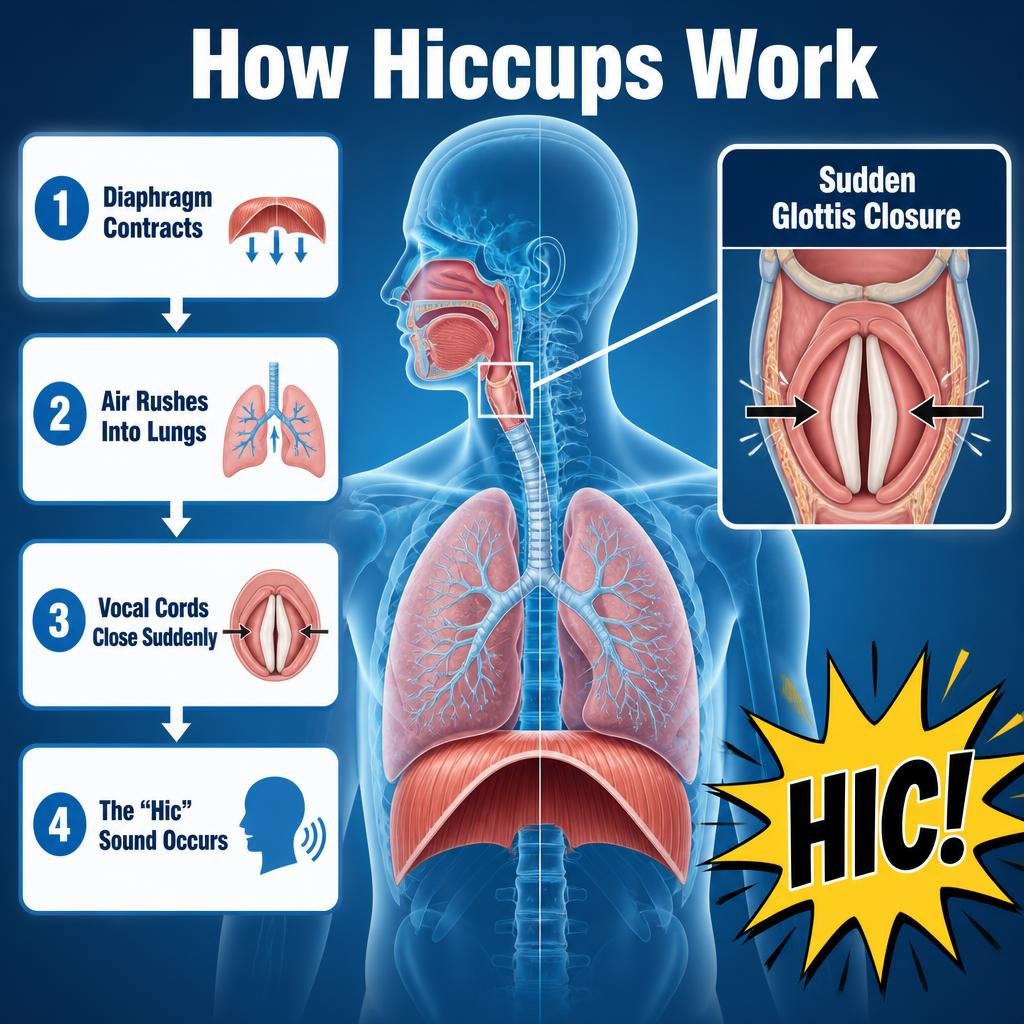
Hiccups are sudden, involuntary spasms of the diaphragm — the dome-shaped muscle beneath your lungs that controls breathing. When the diaphragm spasms, you inhale sharply. Then your vocal cords snap shut almost instantly. That sharp closure is what makes the “hic” sound.
Think of it like your body briefly misfiring, as one gastroenterologist put it — like an air gun going off when it shouldn’t.
The trigger is usually irritation or overstimulation of two specific nerves: the phrenic nerve (which controls the diaphragm) and the vagus nerve (which runs all the way from your brain through your chest and into your gut). When either of those nerves gets agitated, the hiccup reflex kicks on.
Common triggers include:
- Eating too quickly
- Carbonated drinks
- Spicy foods
- Swallowing air
- Sudden temperature changes
- Stress or excitement
Most hiccups last only a few minutes. But when they won’t quit, it’s annoying enough that humans have been trying to solve this problem for centuries. The good news? Some of those old solutions hold up.
If hiccups last more than 48 hours, talk with your doctor. Persistent hiccups can sometimes signal an underlying issue worth checking out.
What the “Old Wives’ Tales” Got Right
Grandmothers around the world have been passing down hiccup cures since long before anyone knew what a phrenic nerve was. What’s interesting is that many of these remedies work through the same mechanism — they either raise the carbon dioxide level in your blood, stimulate the vagus nerve, or interrupt the hiccup reflex arc. Science caught up to the folk wisdom.
Here are some of the most time-tested remedies and why they actually make sense:
A spoonful of sugar. This is probably the most famous one, and it’s not just a myth. Research published in the New England Journal of Medicine found that a teaspoon of granulated sugar stopped hiccups in 19 out of 20 people tested. The theory is that the grainy texture stimulates the vagus nerve at the back of the throat, which essentially resets the reflex. It’s quick, it works for kids, and it tastes good — hard to argue with that.
Drinking from the wrong side of the glass. You’ve probably seen this one. You lean forward and sip water from the far edge of a cup. It sounds silly, but the awkward posture compresses your diaphragm slightly while the swallowing action engages the esophagus. Together, those physical changes may be enough to interrupt the spasm cycle.
Holding your breath. One of the oldest remedies in the book. When you hold your breath, carbon dioxide (CO2) builds up in your blood. That elevated CO2 signals the brain to stop the hiccup reflex. Breathing into a paper bag does the same thing — you’re just recycling your exhaled CO2. This one has real physiological backing.
Sour or acidic flavors. Sucking on a lemon, tasting apple cider vinegar, or sipping pickle juice are all traditional fixes. The sharp, sour sensation creates a burst of nerve activity in the throat and mouth that can override the hiccup signal. This is one our family keeps in the back pocket — a small sip of ACV usually does it.
Getting scared. The “jump out and say boo” method has a real mechanism behind it. A sudden fright releases adrenaline, which causes the body to take a sharp, deep breath. That forces the diaphragm into action and can physically reset its rhythm. It’s not exactly predictable, but it does work sometimes — especially on kids who find it hilarious right after.
Red thread on the forehead. In the Philippines, families wet a small square of paper and press it to the forehead. In Latin American tradition, a piece of red string works just as well. Is there science behind this? Not much. But the distraction of trying something unusual may shift focus away from the hiccup reflex long enough for it to settle. Don’t underestimate the placebo effect — especially with curious little kids.
Hugging your knees. Pulling your knees to your chest and leaning forward compresses the diaphragm from the outside. According to UCLA Health, this posture may help reset the diaphragm’s natural rhythm by applying gentle external pressure. We’ve used this one with our youngest when he was a toddler — he thought it was a game.
How Our Family Handles Hiccups
I’ll be honest — for a long time, my go-to was just “wait it out.” Hiccups usually pass in a few minutes, and I didn’t think much about it.
But then one of our girls started getting hiccups every time she ate too fast — which in our house is basically always. So we started paying closer attention.
Here’s what actually works for us, in order of how fast we reach for it:
For the kids: We start with the sugar trick. One level teaspoon of granulated sugar, swallowed slowly. It works about 80% of the time within a minute or two. For the little ones who won’t do sugar straight, Hiccupops have become a good stash item. They’re ACV-and-sugar lollipops invented by a teenager who spent two years testing over 100 folk remedies — and they often work. We keep a small pack in the kitchen medicine “box”. The kids think they’re a treat, not a remedy, which makes everyone’s life easier.
For adults: I usually go straight to the breath-hold method — big inhale, hold for 10–15 seconds, slow exhale. If that doesn’t work after two rounds, I’ll take a small sip of apple cider vinegar (about half a teaspoon). Raw ACV on its own is sharp, so I dilute it in a little water. Done in under a minute.
For stubborn cases: We recently picked up a HiccAway Straw, which I’ll describe more below. It’s now our “bring out the big guns” move when nothing else is working. It has a pressure resistance built into the bottom that forces you to sip harder than a normal straw — and that extra effort engages both the vagus and phrenic nerves at the same time. It’s genuinely impressive.
Products Worth Keeping on Hand
HiccAway Straw
This one has actual clinical backing. A study published in JAMA Network Open found that the HiccAway stopped hiccups in over 92% of users — and nearly 90% rated it better than any home remedy they’d tried before.
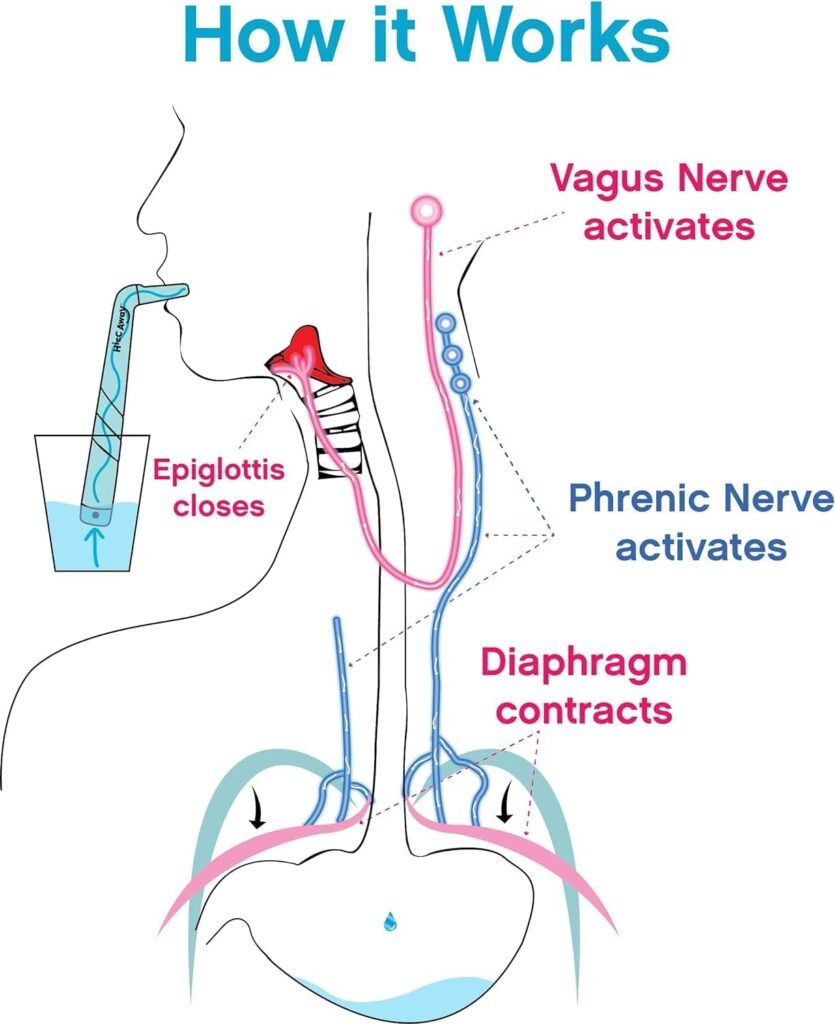
It was designed by a neurosurgeon at UT Health San Antonio who recognized the need for a reliable solution while working in the ICU. The straw has a calibrated cap at the bottom that creates resistance when you sip. That resistance forces you to suck harder and swallow deliberately — which simultaneously activates the phrenic and vagus nerves and engages the diaphragm, essentially breaking the reflex loop.
The HiccAway Straw works for adults and kids (there’s an adult and child setting on the cap), it’s BPA-free, made in the USA, dishwasher safe, and reusable. One mom in an Amazon review wrote: “Every time I use it, my hiccups disappear almost immediately.” Several users noted it worked even when they’d tried everything else.
Best for: Persistent hiccups, frequent hiccup sufferers, kids and adults alike. One honest limitation: You need a glass of water nearby. Not great for on-the-go — unless you’re already at a table.
Hiccupops
These lollipops were invented by a 12-year-old girl named Mallory Kievman, who spent two years testing over 100 folk remedies after suffering a painful bout of hiccups herself. She landed on a combination of apple cider vinegar, sugar, and the physical act of sucking on a lollipop — which together overstimulate the nerves responsible for the hiccup reflex arc and cancel out the “hiccup” signal.
A 2022 review published in the American Journal of Hospice and Palliative Medicine found that Hiccupops worked for about 67% of participants. They come in Original Citrus and Sour Apple, are free of artificial colors and flavors, and are approved for ages 5 and up.
Best for: Kids (especially ones who won’t swallow ACV straight), families who want a quick portable option, moms who want something in their bag “just in case.” One honest limitation: Not a replacement for the HiccAway in truly stubborn cases. But for everyday use — especially with children — they’re perfect.
Bragg Organic Apple Cider Vinegar
This is the old standby. A small sip of raw, unfiltered ACV — diluted slightly in water — activates the same nerve response as sour candies and lemon juice, but more reliably. Bragg’s is the most-referenced brand in both the natural health community and countless Amazon reviews for this purpose.
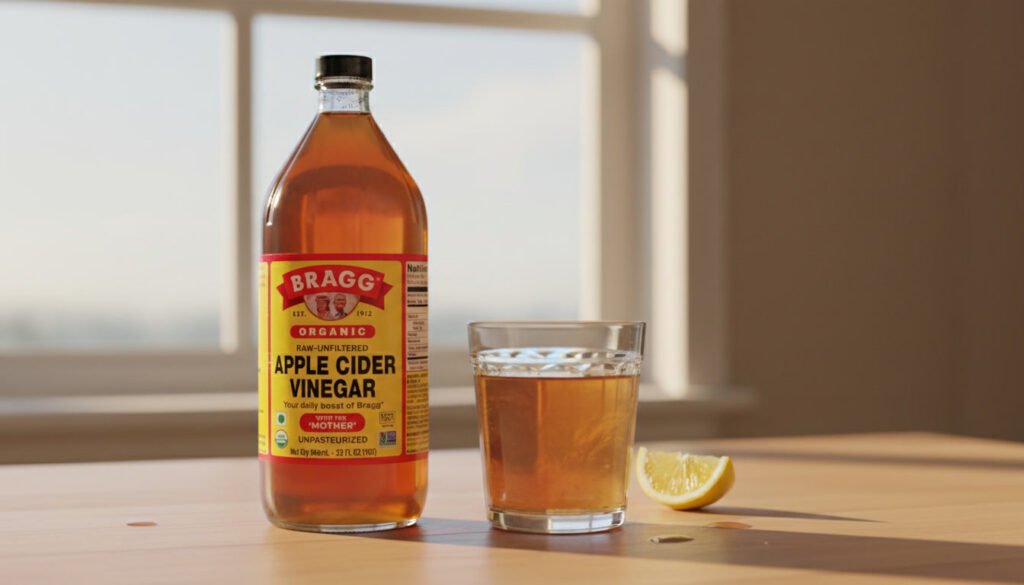
Half a teaspoon in a small amount of water, swallowed in one go. That’s it.
Best for: Adults who don’t mind the taste, anyone who already keeps ACV in the pantry – or the refrigerator, which is where we keep it. One honest limitation: Not ideal for young kids — the taste is sharp and some find it very unpleasant even diluted. In fact, our youngest turns and walks away when he sees the ACV is out on the counter.
How to Try These Remedies at Home
Here’s a simple game plan when the hiccups hit:
- Start with the breath-hold. Inhale deeply for 4-6 seconds, hold for 10–15 seconds, exhale slowly for 6-8 seconds. Repeat twice. This is free, fast, and works often.
- Add pressure. If breathing alone doesn’t stop it, pull your knees to your chest and lean slightly forward while you hold your breath. The compression adds another signal.
- Go sweet or sour. A teaspoon of sugar or a small sip of diluted ACV is your next move. Keep both in the kitchen.
- Try cold water. A slow sip of ice-cold water — drinking steadily without stopping — stimulates the vagus nerve through temperature. Sipping from the far rim of the glass adds the bonus of posture-based diaphragm compression.
- Bring out the HiccAway for anything that won’t quit after a few minutes. Fill a glass with water, insert the straw, and sip firmly while swallowing deliberately. Two or three rounds usually does it.
Frequently Asked Questions
Q: What’s the fastest way to get rid of hiccups? A: The HiccAway Straw has the strongest clinical backing — over 92% success in a JAMA study. For a no-tool option, the sugar method has decades of anecdotal support and was validated in a New England Journal of Medicine study that showed it stopped hiccups in 19 out of 20 people. Start with whatever you have available.
Q: Do hiccup remedies actually work, or do they just distract you? A: Both, honestly — and distraction isn’t nothing. Many remedies work by interrupting the neural loop driving the hiccup reflex. That interruption can come from nerve stimulation (ACV, sugar, cold water), increased CO2 (breath-holding), diaphragm compression (hugging your knees), or forced swallowing (the HiccAway). The mechanism is real, even if the remedy sounds silly.
Q: How do I stop hiccups in a baby or toddler? A: For very young infants, gentle burping and repositioning usually help — their hiccups are often triggered by swallowing air during feeds. For toddlers, a sip of cold water and the knee-hug move work well. Hiccupops are approved for ages 5 and up. When in doubt, ask your pediatrician, especially for frequent or prolonged infant hiccups.
Q: When should I be concerned about hiccups? A: Most hiccups resolve in a few minutes on their own. If hiccups persist for more than 48 hours, or if they’re disrupting sleep, eating, or breathing, talk with your doctor. Chronic hiccups can occasionally indicate an underlying issue — acid reflux, nerve irritation, or rarely something more significant. Don’t panic, but do get it checked.
Q: Does drinking water upside down really work? A: Sometimes. The awkward lean-forward posture applies light pressure to the diaphragm while the swallowing motion engages the esophagus. It’s essentially combining two remedies in one. It works better than it has any right to, but it’s also easy to spill water on yourself — which is entertainment in its own right.
The next time someone at your table hiccups, you won’t have to shrug. You’ve got a whole toolkit now — from your grandmother’s spoonful of sugar to a clinically-tested straw that’s backed by JAMA. Start simple, stack the strategies, and know when to call the doctor.
If you want a no-hassle solution to keep in the kitchen, we’d start with a HiccAway Straw. It’s worth having around.
We share what works for our family based on our own research and experience. This is not medical advice. Always consult your healthcare provider.