
Chamomile Tea for Stomach Acid: Does it Actually Help?
This post contains affiliate links. If you buy through our links, we may earn a small commission at no extra cost to you — and it helps keep Forged Family HQ running. We only recommend what we actually use or have researched thoroughly.
It starts the same way every time. Dinner is done, the kitchen is mostly clean, and you finally sit down — only to feel that familiar burn creeping up your chest. Or maybe it’s the uncomfortable, heavy feeling that settles in after a big meal and just won’t quit.
You don’t want to pop another antacid. You’re trying to be more thoughtful about what goes into your body. So you find yourself standing at the pantry, wondering: where did all of these snacks come from? No. Wait. You’re actually thinking: could chamomile tea actually help with stomach acid?
That’s exactly the question we went looking for answers on. And the short answer? Yes — chamomile tea for stomach acid is a real, evidence-informed option for mild symptoms. But there’s more to it than just steeping a bag and calling it a night. Here’s what we found, what the research actually says, and how to use it so it has the best chance of working.
First, Let’s Talk About What’s Actually Happening
Before a remedy makes sense, it helps to understand what you’re dealing with.
Stomach acid isn’t the bad guy. Your body makes it for a reason — it breaks down food, activates enzymes, and helps absorb nutrients like B12 and iron. The problem isn’t the acid itself. The problem is when that acid ends up somewhere it doesn’t belong.
Acid reflux happens when the muscle at the bottom of your esophagus — the one that’s supposed to stay shut after you eat — relaxes too soon. Acid slips up into the esophagus, and that’s the burn. Heartburn is just the name for that burning sensation in your chest or throat.
Common triggers include large meals, eating too fast, lying down right after eating, high-fat or spicy foods, caffeine, alcohol, and stress. Yes, stress. The gut-brain connection is real, and a rough day can absolutely make your stomach more reactive.
This matters because chamomile works on several of these factors at once — which is part of why so many families have reached for it for generations.
So What Does Chamomile Actually Do?
Chamomile isn’t just a sleepy-time tea. It contains compounds that interact directly with your digestive system in ways that matter for stomach acid symptoms.
The two worth knowing about are bisabolol and apigenin. Bisabolol has notable anti-inflammatory properties — it helps calm irritated tissue, including the lining of the esophagus and stomach. Apigenin binds to receptors in the gut and nervous system that help reduce spasms and tension. Together, they make chamomile something of a gentle multi-tool for digestive discomfort.
Here’s what that looks like practically:
It may help reduce inflammation. When your esophageal or stomach lining is irritated from repeated acid exposure, chamomile’s anti-inflammatory action can help soothe that tissue. Think of it less like putting out a fire and more like cooling down the surface afterward.
It may help relax the digestive tract. Chamomile acts as a mild antispasmodic. That means it can ease the cramping and tension that often come with indigestion and reflux.
It may help address stress-triggered symptoms. This one is underrated. Because chamomile also calms the nervous system, it can reduce the stress response that often makes acid symptoms worse. A calmer body digests better.
We want to be clear: chamomile tea is not a cure for chronic acid reflux. But as a gentle daily support for mild symptoms — especially stress-related or food-triggered discomfort — it’s a reasonable, low-risk option worth trying.
What the Research Actually Says
The honest truth about chamomile research is that most of it uses concentrated extracts, not brewed tea. That means the studies show us what chamomile can do — but brewed tea is milder than an extract, so the effects in your mug will be gentler too.
That said, the research points in a consistently positive direction for digestive support. Studies have found that chamomile extracts reduce inflammation in gastrointestinal tissue, improve gut motility (which helps food and acid move through your system instead of sitting there), and ease smooth muscle spasms in the digestive tract.
A 2019 review in Molecular Medicine Reports backed this up — chamomile acts as what researchers call a carminative (basically, it helps with bloating and gas) and an antispasmodic. Both of those matter when you’re dealing with stomach acid creeping where it shouldn’t.
There’s also a long track record of traditional use. Chamomile has been used for digestive complaints across cultures for thousands of years. That doesn’t make it magic, but it tells us this isn’t just an internet trend.
Where does that leave you? Chamomile tea for stomach acid is a reasonable first-line comfort measure for mild, occasional symptoms. It’s not a replacement for medical evaluation if your symptoms are frequent or severe. But for the kind of after-dinner burn or stress-belly discomfort that most of us experience from time to time, it’s a solid place to start.
How Our Family Actually Uses It
Here’s our routine, and it’s simple.
About 30 to 60 minutes after dinner, we heat up distilled water in a kettle, pour it over a bag of Traditional Medicinals Organic Chamomile (this is the one we buy most often), and cover the mug with a small plate while it steeps for about 10 minutes.
After that, it’s a household split. My wife likes to add a little honey and drink it right away — basically lava temperature. I have to wait for it to cool down before I can enjoy sipping it slowly. Either way, by the time the cup is done, the stomach feels settled.
That’s it. No complicated protocol. No special timing tricks. Just a cup of chamomile tea after dinner, made well, and given enough time to steep.
Here are a few tips we’ve picked up along the way:
Steep it covered. Chamomile’s beneficial volatile oils can escape in steam. A small plate on top of your mug keeps them in the tea where they belong. Steep for at least 5–10 minutes for a stronger brew.
Skip the dairy. Adding milk can actually worsen reflux symptoms for some people. Honey is the better option if you want something sweet — it may even have its own mild soothing effect on the esophagus.
Don’t drink it scalding hot. Very hot liquids can irritate an already sensitive esophagus. Let it cool to a comfortable temperature first. (I learned this the hard way.)
Aim for 1–2 cups a day. This is a reasonable amount for most healthy adults. More isn’t necessarily better here.
Be consistent. One cup when you’re already symptomatic is better than nothing, but you’ll notice more benefit from making it a regular part of your evening routine.
What Else We’ve Tried (and Why We Keep Coming Back to Chamomile)
Chamomile wasn’t the first thing we tried for stomach acid. We’ve tested a few other natural options over the years, and they all have their place — but none of them have replaced chamomile as our go-to.
Peppermint tea. Peppermint tea does settle down the tension in the stomach. It’s a decent backup option and we keep it in the pantry. But for acid specifically, it hasn’t been as consistently effective for us as chamomile. We’ll still reach for it if chamomile isn’t available.
Peppermint oil on the abdomen. We’ve massaged peppermint oil (with a carrier oil) directly on our stomachs. It helped reduce tightness and general discomfort, but it didn’t do much for the acid burn itself. Better for bloating or cramping than for reflux.
Yogi Stomach Ease Tea. Yogi Stomach Ease has helped us before — it’s a blend with fennel, peppermint, and licorice root. It’s a solid all-purpose digestive tea. But for stomach acid specifically, straight chamomile has been more effective in our experience.
Every family is different. What works best for us might not be exactly what works best for you. But after trying all of these, chamomile remains the first thing we reach for when that after-dinner burn shows up.
The Teas We Actually Use and Recommend
Not all chamomile teas are created equal. The quality of the flower, how it’s processed, and what’s added (or not added) makes a real difference. Here are the three we trust.
Traditional Medicinals Organic Chamomile
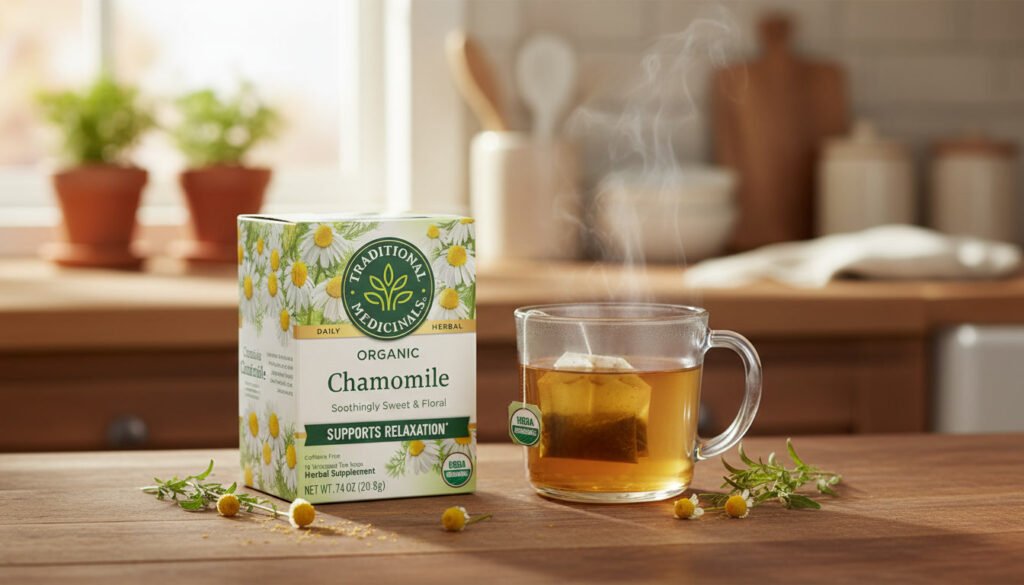
This is the one you’ll find in our pantry consistently. Traditional Medicinals sources pharmacopoeial grade chamomile — which means the plant material meets verified quality standards, not just marketing claims. It’s USDA certified organic, non-GMO verified, and the flavor is clean and floral without being overpowering.
It’s a great starting point if you’ve never tried chamomile for digestive support. Straightforward, trustworthy, easy to find.
One honest note: the flavor is mild. If you’re used to stronger herbal teas, you may want to steep it on the longer end or use two bags. It’s gentle by design — which is also why it’s gentle on your system.
Check out our favorite Chamomile Tea
Yogi Comforting Chamomile
Yogi is a brand a lot of natural-minded families already trust, and their chamomile holds up well. It’s blended with a touch of organic spearmint and lemongrass, which gives it a slightly brighter flavor than a straight chamomile tea — still gentle, but a little more interesting to drink every night.

It’s a good fit if Traditional Medicinals feels too plain for you or if you’re trying to get a resistant family member on board. The flavor makes it easier to sip regularly without it feeling medicinal.
Honest note: because it’s a blend, the chamomile concentration is slightly lower than a single-herb tea. For most people that’s fine — but if you’re chasing the strongest dose, steep it a little longer.
TAZO Calm Chamomile

TAZO Calm is one of the most accessible chamomile teas on the market — you can find it at almost any grocery store, which makes it a solid option if you want to start tonight without a special order. It’s a blend of chamomile, rose petals, and citrus, and it has a naturally sweet, floral flavor that most people enjoy right away.
It’s not the most potent option on this list, but it’s a great entry point. If you’ve never really liked herbal tea before, this is the one most likely to change your mind.
Honest note: it’s not certified organic. If that matters to your family, Traditional Medicinals or Yogi are the better picks.
When Chamomile Tea Isn’t Enough
We’d be doing you a disservice if we didn’t say this clearly: chamomile tea is a support tool, not a substitute for medical care.
There are symptoms that deserve more than a cup of tea. Please check in with your healthcare provider if you’re experiencing:
- Heartburn or acid reflux two or more times per week, consistently
- Pain or difficulty when swallowing
- Symptoms that wake you up at night
- A feeling like food is stuck in your chest or throat
- Nausea or vomiting that isn’t explained by illness
These can be signs of something more serious — like GERD, Barrett’s esophagus, or other conditions that need proper evaluation. A good doctor will take your concerns seriously and help you figure out whether a lifestyle approach is enough or whether additional treatment makes sense.
Chamomile is a wonderful tool in your wellness toolkit. But knowing when to use a different tool is just as important.
This is not medical advice. Always consult your healthcare provider about ongoing or severe symptoms.
Frequently Asked Questions
Can chamomile tea make acid reflux worse? For most people, no — chamomile is generally well-tolerated and considered safe for digestive use. That said, everyone’s body is different. If you notice your symptoms feel worse after drinking it, stop using it and talk with your doctor. Allergy note: Chamomile is also related to ragweed, so people with ragweed allergies should proceed with extra caution.
How long does chamomile tea take to work for stomach acid? Some people notice relief within 20–30 minutes of drinking it. It’s not as fast as an antacid, which neutralizes acid almost immediately. Chamomile works more by supporting and calming the digestive system over time, so consistency matters more than any single cup.
Is chamomile tea safe for kids with tummy aches? Families often use chamomile tea for stomach acid in children, especially when upset stomachs interfere with bedtime. It’s generally considered safe for children over 1 year old in small amounts. That said, always check with your pediatrician before making it a regular habit, especially for very young children or kids with allergies.
Can I drink chamomile tea every day? For most healthy adults, yes — daily chamomile tea is considered safe. If you’re pregnant, breastfeeding, or taking blood thinners, check with your provider first. Chamomile can interact with certain medications and may have mild effects on uterine muscle tone.
Is chamomile tea better than antacids for heartburn? They work differently, so it’s not really a head-to-head comparison. Antacids neutralize acid quickly — they’re fast relief. Chamomile supports the gut lining, reduces inflammation, and calms the system over time. Some families use both depending on the situation: chamomile as a daily preventive habit, and an antacid for acute breakthrough symptoms.
If you’ve been standing at the pantry wondering whether that box of chamomile tea is actually worth opening — it is. It won’t fix a serious medical condition, and it’s not a magic cure. But for mild, occasional stomach acid symptoms, it’s a gentle, well-tolerated, and genuinely evidence-informed option that’s been trusted by families for a very long time.
Try one cup tonight, 30 minutes after dinner. Keep it up for a week. See how your body responds. And if you found this helpful, share it with someone in your life who’s always reaching for the antacids — they might appreciate having another option in their corner.
We share what works for our family based on our own research and experience. This is not medical advice. Always consult your healthcare provider.






One Comment