How to Get Rid of a Headache: Natural Remedies That Actually Work
This post contains affiliate links. If you buy through our links, we may earn a small commission at no extra cost to you — and it helps keep Forged Family HQ running. We only recommend what we actually use or have researched thoroughly.
It hits in the middle of a Tuesday afternoon. You’ve been staring at a screen, running kids to activities, and somewhere between the grocery run and the third load of laundry, a headache moves in like an unwelcome guest and refuses to leave.
Before you reach for a bottle of ibuprofen, there’s a good chance you can get rid of a headache without it — or at least get meaningful relief while you figure out what’s causing it. We’ve spent time researching what really works, and some of these remedies are backed by surprisingly solid science.
If you struggle with how to get rid of a headache, here’s what we do in our house, and what the evidence says about why it works.
What Kind of Headache Do You Have?
You cannot learn how to get rid of a headache without knowing what type it is. Not all headaches are the same, and knowing which type you’re dealing with helps you pick the right remedy.
Tension headaches are the most common kind. They feel like a dull, pressing band of pain around your forehead, temples, or the back of your head. Stress, tight neck muscles, eye strain, and dehydration are the usual culprits. Most natural remedies work really well for these.
Dehydration headaches feel like pressure across your whole head — not just one side. They get worse when you move around or bend over. If you haven’t had much water today, this is probably what you’ve got.
Migraine headaches are more intense. They often come with throbbing pain on one side of the head, nausea, and sensitivity to light or sound. Natural remedies can help with migraines too, but severe migraines may also need medical support.
Sinus headaches show up with pressure behind your eyes and cheekbones, usually alongside congestion. They feel worse when you lean forward.
Once you have a sense of what you’re dealing with, the steps below become much more targeted.
Start Here: Drink Water First
If you do nothing else from this article, do this. When you’re struggling with how to get rid of a headache, drink a big glass of water right now.
Dehydration is one of the most common headache triggers, and it’s the easiest to fix. Research from Harvard Health confirms that even mild fluid loss can trigger headache pain — the brain’s surrounding membranes (called the meninges) are sensitive to fluid shifts, and when your body gets low on water, those membranes can pull on pain receptors.
The fix is simple. Drinking 16 to 32 ounces of water can ease a dehydration headache within 30 minutes to an hour in most cases. If you’ve been especially active, add electrolytes — minerals like sodium and potassium help your body actually absorb and use the water you’re drinking.
In our house, we keep water readily available for exactly this reason. When someone gets a headache, that’s the first thing we hand them. More often than not, it makes a real difference within the hour.
Look at the color of your urine. Pale yellow means you’re hydrated. Dark yellow means you need water. It sounds basic, but it’s one of the most reliable headache prevention tools we’ve found.
Peppermint Oil for Tension Headaches
Peppermint oil isn’t just a trendy wellness thing — it has real research behind it – and that research includes our house on our family members.
A well-cited German study published in the journal Schmerz found that applying a 10% peppermint oil solution to the forehead and temples was just as effective as 1,000 mg of acetaminophen for relieving tension headache pain. The relief started within 15 minutes. That’s not folk medicine — that’s a randomized, placebo-controlled study. Peppermint oil is now actually listed in professional headache treatment guidelines in Germany and several other countries.
The reason it works: peppermint contains menthol, which creates a cooling sensation that reduces the feeling of pain. It also helps relax the muscles in your forehead and increases blood flow to the area — two things that directly address what causes tension headaches.
How to use it: dilute a few drops of peppermint essential oil in a carrier oil (we use almond or castor oil) — about 1–2 drops per teaspoon of carrier oil — then rub it gently across your forehead and temples. Avoid getting it near your eyes because it can make your ojos (that’s “eyes” for you non-Spanish speakers) feel like they are on fire.
Keep a roller bottle with diluted peppermint oil in your bathroom or purse. When a headache starts, applying it right away gives you the best chance of catching it early before it builds. We’ve been doing this for a couple of years and it’s become our second line of defense – after water – for everyday tension headaches.
One honest note: peppermint oil is not safe to use on or near infants, and should be kept away from young children’s faces. For adults and children over 6, it’s generally well-tolerated when properly diluted.
How Our Family Handles Headaches
We’ve tried a lot of things over the years, and we’ve landed on a simple protocol that works for most of the headaches that come up in our house.
Step one is always water. The moment a headache starts, whoever has it drinks 16 to 32 ounces of water, sometimes with a pinch of sea salt or a packet of electrolytes stirred in. We keep LMNT electrolyte packets in the pantry for this — they’re clean ingredients and they work fast.
Step two is diluted peppermint oil. While the water is going down, we apply diluted peppermint oil to the forehead and temples using a pre-made roller bottle. We make ours with 10 drops of peppermint essential oil in a 10ml roller bottle filled with almond oil. It’s been sitting in the medicine cabinet for months and gets used probably twice a week.
Step three is a cold compress. We fill a zip-lock bag with ice, wrap it in a thin dish towel, and apply it to the back of the neck or the forehead for about 15 minutes. Cold helps constrict blood vessels and slow nerve signals — which is basically what it’s doing when it reduces pain.
For recurring headaches, we’ve added magnesium glycinate to our nightly supplement routine. More on that in the next section — it’s made a real difference for us over time, but it’s more of a long game than an immediate fix.
Most of the time, this three-step approach handles it without any medication. When it doesn’t — when the headache is severe, comes with fever, or doesn’t improve at all — we don’t hesitate to use ibuprofen or call the doctor. Natural remedies are tools, not a religion.
Magnesium: The Long-Game Headache Remedy
If you get headaches regularly — more than a couple a month — magnesium is worth knowing about.
Research shows a strong link between low magnesium levels and frequent headaches, especially migraines. Studies have found that people who suffer from migraines often have lower magnesium levels in their blood and brain than those who don’t. The American Headache Society gives magnesium a “Level B” rating for migraine prevention — meaning it’s probably effective and worth considering.
How does it work? Magnesium helps regulate nerve signaling and blood vessel function in the brain. When you’re low on it, those systems can get dysregulated in ways that make headaches more likely and more severe. Think of it as a stabilizer for your nervous system.
The most commonly studied dosage is 400–600 mg of elemental magnesium daily. For daily supplementation, magnesium glycinate is generally the most gentle on the stomach. Magnesium citrate is another good option, especially if you tend toward constipation. Magnesium oxide has the most clinical research for migraine prevention, but it’s harder on digestion for some people.

We use magnesium glycinate as part of our nightly routine — one for me, one for my wife. We’ve noticed fewer tension headaches since making it a consistent habit. This isn’t something you’ll feel in the first few days; most studies show benefits showing up after 8–12 weeks of consistent use.
One important note: if you have kidney issues, check with your doctor before adding high-dose magnesium. And as always, this isn’t a substitute for medical care if you’re dealing with frequent, severe headaches.
Other Options — Cold Compress, Heat, and Pressure Points
These three approaches are simple, free, and genuinely effective.
Cold compress works especially well for migraines. A University of Hawaii study found that applying a cold pack to the carotid arteries on the front of the neck helped 77% of participants reduce their pain by about a third within 30 minutes. Cold constricts blood vessels, which can calm the throbbing pain that comes with vascular headaches.
Heat is better for tension headaches and neck-related pain. A warm towel or heating pad applied to the neck and shoulders helps relax the tight muscles that are often pulling on your head.
Acupressure is worth trying, especially if you don’t have anything else on hand (pun intended). The LI4 pressure point — the webbed area between your thumb and index finger — is the most researched spot for headache relief. Press firmly into that area and hold for about 60 seconds on each hand. It won’t fix a severe migraine, but for mild to moderate tension headaches, a lot of people find it genuinely helpful.
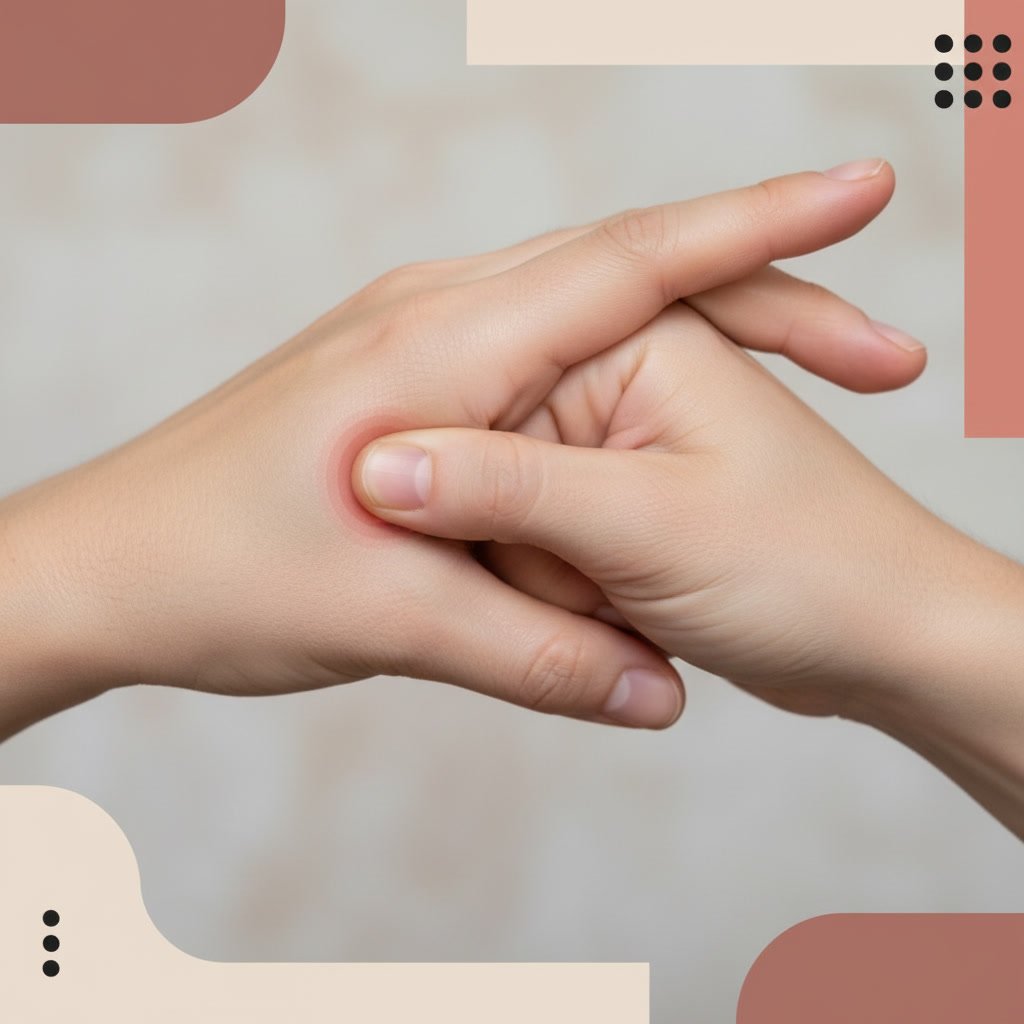
A simple temple and occipital massage can also provide real relief. The occipital nerve runs along the base of the skull in the back of your head. Massaging that area with your fingertips — using small, firm circles — can ease tension headache pain within a few minutes.
What Else We’ve Tried (and What We Keep Coming Back To)
Over the years we’ve tried a lot of headache approaches. Here’s an honest breakdown.
Ginger tea has decent research for migraine-type headaches. One study found ginger powder comparable to sumatriptan (a prescription migraine drug) for reducing migraine severity. We make it by simmering a few slices of fresh ginger in water for 10 minutes, then adding honey. It’s soothing and it does seem to help with nausea that sometimes accompanies headaches. We still make it when someone feels a migraine coming on. It’s not our go-to for tension headaches, but for something that feels more like a migraine, it earns its place.
Coffee works for some headaches — caffeine constricts blood vessels and is even an ingredient in some OTC headache medicines. But it’s a double-edged sword. If you’re a regular coffee drinker and you miss your morning cup, the headache you feel later is actually a caffeine withdrawal headache. And using coffee too often for headache relief can lead to rebound headaches. We use it sparingly and only when other methods haven’t worked.
Deep breathing and progressive muscle relaxation have real research behind them for tension headaches. A 12-week study found that people with chronic tension headaches who practiced deep breathing and intentional muscle relaxation reduced their headache severity by 57% and their headache days by nearly half. This is powerful, and we underuse it. When the kids are in bed and the headache is low-grade and tension-driven, 10 minutes of slow, deep breathing genuinely helps.
What we keep coming back to: the water + peppermint oil + cold compress combination. It’s fast, it’s clean, and it works for the vast majority of headaches we deal with. The magnesium routine handles the prevention side.
How to Get Rid of a Headache: Our Step-by-Step
Here’s the simple protocol we use, start to finish:
- Drink water — 16 to 32 ounces immediately. Add electrolytes if you’ve been active or it’s hot outside.
- Apply peppermint oil — diluted in a carrier oil, rolled or rubbed onto your forehead and temples. Do not apply near eyes.
- Cold compress — ice wrapped in a thin towel, applied to the back of the neck or forehead for 15 minutes.
- Lie down in a dark, quiet room — light and sound often make headaches worse; giving your brain a break matters.
- Massage the base of your skull — small firm circles along the back of your head where it meets your neck.
- Try the LI4 pressure point — firm pressure in the webbed area between thumb and index finger, 60 seconds each hand.
- Give it 30–60 minutes — most mild to moderate headaches respond within this window if the root cause is dehydration or tension.
- If it doesn’t improve, use OTC pain relief as appropriate, and consider whether there’s a pattern worth discussing with your doctor.
Frequently Asked Questions
Q: Not just How to get rid of a headache, but also how fast can I get rid of a headache? A: It depends on the cause. A dehydration headache can ease within 30 minutes of drinking water. Peppermint oil applied to the temples can start reducing tension headache pain within 15 minutes, according to clinical studies. Some headaches take an hour or two — and some need medication. If yours hasn’t improved in two hours despite trying these remedies, don’t tough it out.
Q: Is it safe to use peppermint oil on kids for headaches? A: Peppermint oil is approved for use on children over 6 years old for tension headaches, properly diluted in a carrier oil. It should never be applied near an infant’s face or used on children under 6. Always dilute it — never apply essential oils neat (undiluted) to skin.
Q: What magnesium is best for headaches? A: Magnesium glycinate is generally the most gentle on digestion and absorbs well. Magnesium citrate is another solid option. For acute migraine prevention specifically, magnesium oxide has the most clinical research behind it, though it can cause loose stools at higher doses. Always start low and work up slowly, and check with your doctor if you have kidney concerns.
Q: Why do I wake up with a headache every morning? A: Morning headaches can be caused by dehydration (your body goes hours overnight without water), poor sleep position creating neck tension, sleep apnea, or — if you drink a lot of coffee — overnight caffeine withdrawal. Drinking a glass of water first thing in the morning and doing a few gentle neck stretches is a good starting point. If morning headaches are frequent, that’s worth mentioning to your doctor.
Q: When should a headache concern me enough to see a doctor? A: Seek medical attention right away if your headache comes on suddenly and is the worst headache of your life, if it’s accompanied by fever, stiff neck, confusion, or vision changes, or if it follows a head injury. Also see your doctor if you’re having more than 15 headache days per month — that crosses into chronic territory and deserves professional evaluation.
If headaches are a regular part of your life, you deserve to know how to get rid of a headache better than just managing them one at a time. Start with the basics — hydration, sleep, stress management — and use the remedies in this article as a reliable toolkit. The water-peppermint-cold compress combination handles most of what comes up in our house. Add magnesium to your nightly routine if you’re getting headaches frequently, and give it a couple of months to do its work.
Keep these remedies bookmarked. Share this with another parent who reaches for ibuprofen as a reflex — there’s usually a better first step.
We share what works for our family based on our own research and experience. This is not medical advice. Always consult your healthcare provider.